

Conscious
Connected
Breathwork
A Different Approach
to Healing
Talking helps us understand. But the body holds what the mind cannot process.
Conscious Connected Breathwork (CCB) is a powerful, body-led approach to release trauma, begin emotional healing and regulate the nervous system - helping you return to presence, safety, inner clarity and more of your real self.
I am a fully qualified CCB Practitioner, trained with Intuitive Breathwork UK.
I currently offer 1:1 sessions in Cambridgeshire, and soon online and in group spaces.
What is Conscious Connected Breathwork (CCB)?
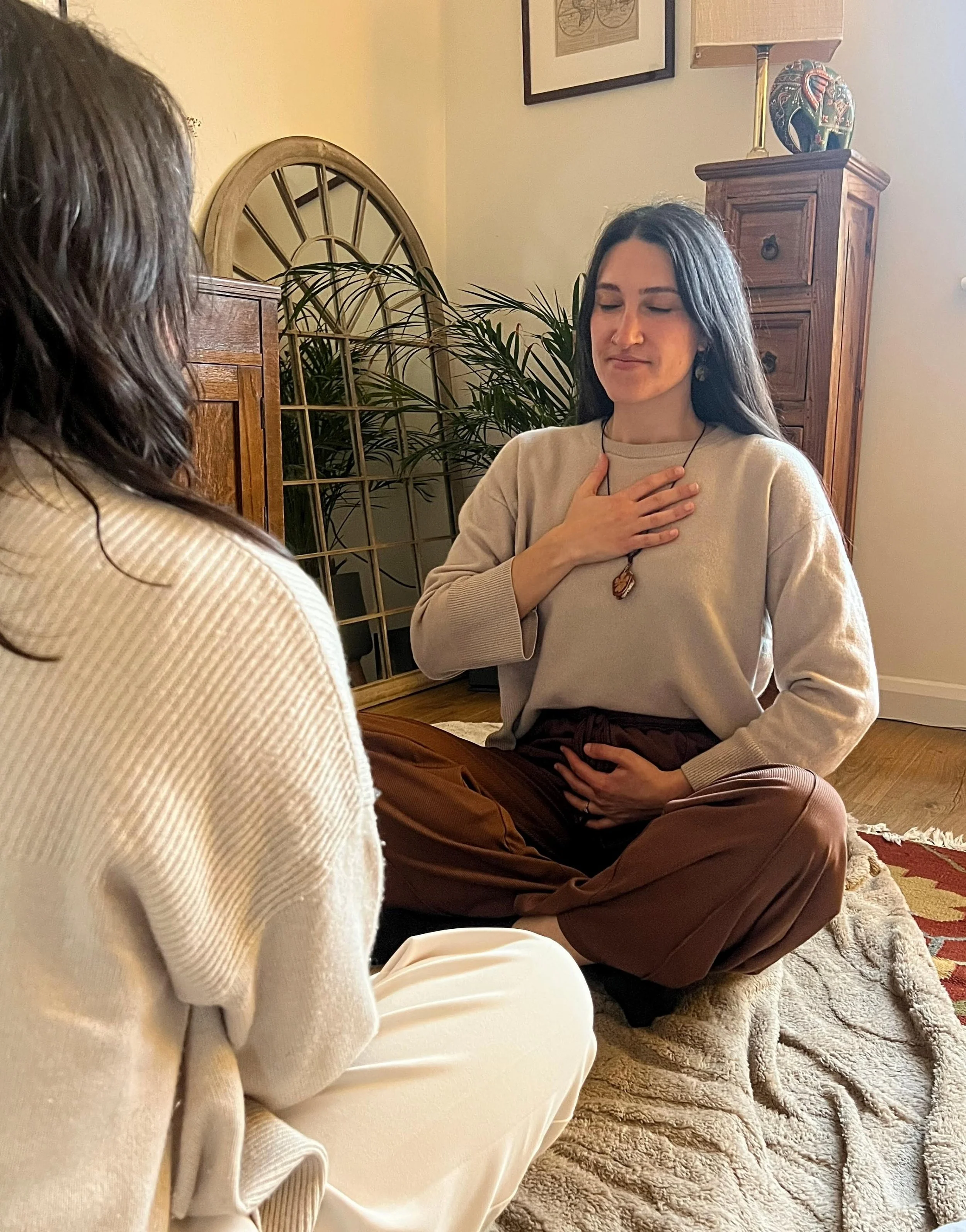
CCB (Conscious Connected Breathwork) is a connected, diaphragmatic style of breathing. That means we’re breathing down into the belly, into the diaphragm, with an open mouth and no pauses between inhale and exhale.
CCB is a self-healing modality, also known as “therapy without talking”. We use your own breath as medicine and it works on a deep, therapeutic level. It differs from Pranayama (the ancient yogic modality), from Functional Breathwork (used to optimize oxygen intake for energy, focus, or calm) or from the Wim Hof Method. With CCB, we’re gently inviting the body to guide the process, rather than the mind.
In activating the diaphragm, we have an activated nervous system, so we can start feeling safe to explore our subconscious and release traumas or emotional baggages that we have been carrying for a long time.
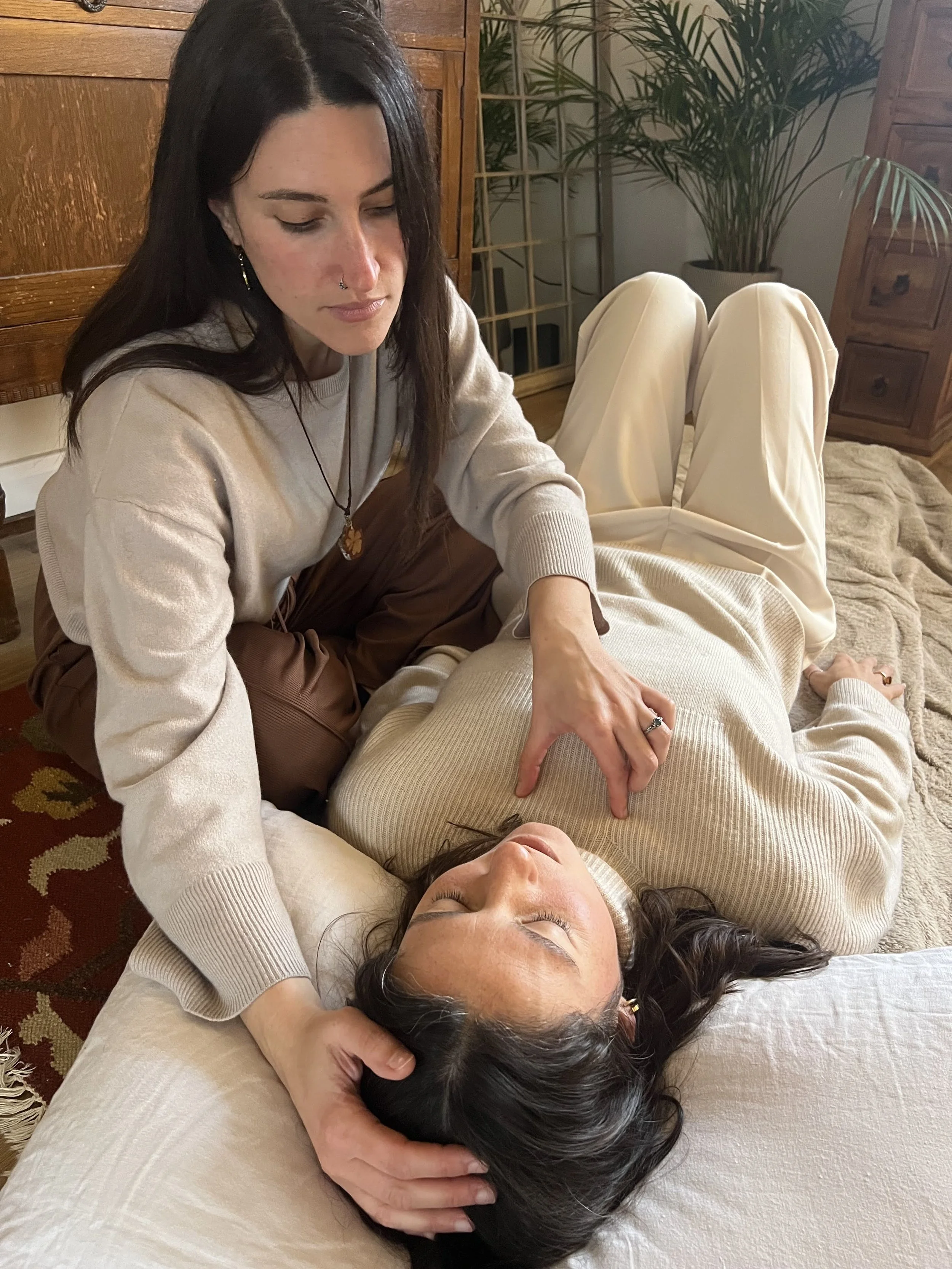
During the session, I will work with acupressure points if I notice areas where your breath is restricted. Applying gentle pressure can help open the breath, soften physical holding patterns, and support emotional release. I also work with affirmations directed to your subconscious.
Please note, this practice is not always suitable in its full form for everyone. Certain health conditions may require adjustments. If you have any specific needs, let’s chat and together we can discuss what breathwork practice will best support you.
How Conscious Connected Breathwork helps
-
Trauma doesn’t just live in our mind. It lives in the body, specifically in our fascia, the web-like connective tissue that wraps around every muscle, bone, and organ. Fascia is like this fluid spiderweb in the body, but when we experience stress, trauma, or grief, that tissue can literally contract and harden.
This breathwork is powerful because it bypasses the thinking brain and goes straight into the body. By breathing this way, we can access what is deeply buried in our subconscious and any event, emotion, situation that hasn’t been processed or hasn’t been dealt with, can now finally be integrated.
-
The way we breathe is the way we live, so when we bring awareness to the breath, we’re also bringing awareness to how we’re living.
That’s why conscious connected breathwork is so powerful. It gives us a chance to reset old patterns. By opening the breath, we open up the space to feel what we’ve been avoiding and we can re-train the nervous system so that it feels safe to expand and live more fully. In opening our breath, we give our body the chance to release any tension or emotional blockages and gain a state of balance and regulation.
-
From a neuroscience perspective, around 80% of the information in our nervous system travels from body to brain, and only 20% from brain to body. This is called a bottom-up approach and it explains why simply thinking differently doesn’t always help. You can know something logically (“I shouldn’t be scared”, “I know I’m safe”, ”I shouldn’t overthink this”, etc) and still feel overwhelmed. The thinking mind can’t override a dysregulated nervous system. Healing has to come through the body. And the breath gives us direct access.
-
The diaphragm is not just a muscle. It is directly connected to the vagus nerve, our primary “regulation switch.” When the diaphragm begins moving again:
The vagus nerve signals to the brain: “We are safe.”
The survival system can stand down.
The body becomes available for softening and healing.
-
During CCB the pH in our body changes, because we have more oxygen and less carbon dioxide. This alters brain states and can unlock: Old memories, Emotions, Deeper insights, Physical release.
-
CCB gently changes the breath pattern, which changes the body’s signals to the brain, helping dissolve survival responses that may have been running for years.
This is why people often experience emotional release, clarity, new insight, deep rest, a greater sense of safety, more space in the body and mind and triggers losing their charge
Benefits of Breathwork
On a physical level, Breathwork helps with:
Boosting energy
Stimulating the lymphatic system, helping to detoxify the body
Alleviating tension in the muscles
Reducing headaches, asthma, respiratory conditions and digestive issues
Improving sleep
Reducing allergies
On an emotional and more spiritual level, Breathwork helps with:
Reducing stress, anxiety, depression, panic attacks
Releasing past hurt and trauma
Shifting negative thought patterns and self-sabotaging behaviours
Increasing self esteem, joy and a feelings of inner balance
Expanding conscious awareness
Strengthening a spiritual connection
How the Sessions Work
First sessions are 90min long
The session is divided into:
Introduction to the technique
I guide you through what to expect, how it works, and how to work with your body safely and intentionally.
Personalised Breath Analysis
I observe your breath and feedback to you what I can see and what it means.
Full Guided Breathwork Session
I guide you, track your body’s responses, and support shifts and releases that want to happen. 10 minutes at the end of the session will be used for integration, allowing your system to settle and come back into the space.
Closing Sharing
A moment to share anything that felt significant or ask questions.
Follow-up Sessions are 60 min
During every session, I will invite you into a practice called toning, making a gentle sound and grounding movements. This helps to send safety signals to yourvagus nerve, opening the chest, and helping with emotional release and regulation.
What makes me different
Breath Analysis
This is an essential part of my approach.
During the first session, I observe the natural rhythm and patterns of your breath. This reveals a lot: how your nervous system is functioning, where tension lives in the body, which emotional patterns may be active, and how energy moves (or doesn’t move) through you. It gives us a clear starting point, so your journey is personalised, effective and deeply supportive.ve.
Ready to begin?
If you feel the pull, even if it’s only a whisper, trust it!
Click the button below to set up your introductory call.
Your breath knows the way back home.
FAQs
-
It is similar in that both use conscious connected breathing for deep emotional release, but CCB is generally more trauma-informed, nervous-system focused, and designed to be gentle, safe and resourcing rather than overwhelming.
-
You might, but you don’t have to. Some sessions are emotional, some peaceful, some full of insight. Your body will only go as far as it feels safe to go that day.
-
That’s extremely common. In fact, many clients come to breathwork because they can’t drop into their body. I guide you through grounding, safety and techniques that help the body soften at its own pace.
-
Yes. When CO₂ levels shift and the nervous system activates, the body unfreezes and releases tension. Trembling, warmth, tingling or movement are signs of stored energy discharging.
-
Yes. CCB is designed for trauma healing and done slowly, gently and resourced. However, you must disclose any medical or psychological conditions so we can ensure the session is appropriate for you.
-
Something always happens, it just may not be dramatic. Even a small shift in breathing pattern equals: reduced nervous system activation, more internal safety, long-term emotional regulation. Sometimes the deepest healing is subtle.
-
Clients often describe feeling: lighter, grounded, clearer, open, softer, more in their body. Some feel emotional or introspective for a day as their system integrates - this is normal.
-
Every journey is different. I would personally recommend a minimum of 3-5 sessions for lasting results and changes. But we’ll always work at your pace.